
The right rubber, fitted right
Star-marked, run-flat or conventional — tyres chosen for your exact BMW, fitted, balanced and TPMS-reset by people who understand what the chassis was tuned for.
When tyres are trying to tell you something
Tyres rarely fail without warning — they drop hints for months. Some of these point at the tyres themselves; others, like inner-edge wear, usually mean the geometry needs looking at before new rubber goes anywhere near the car.
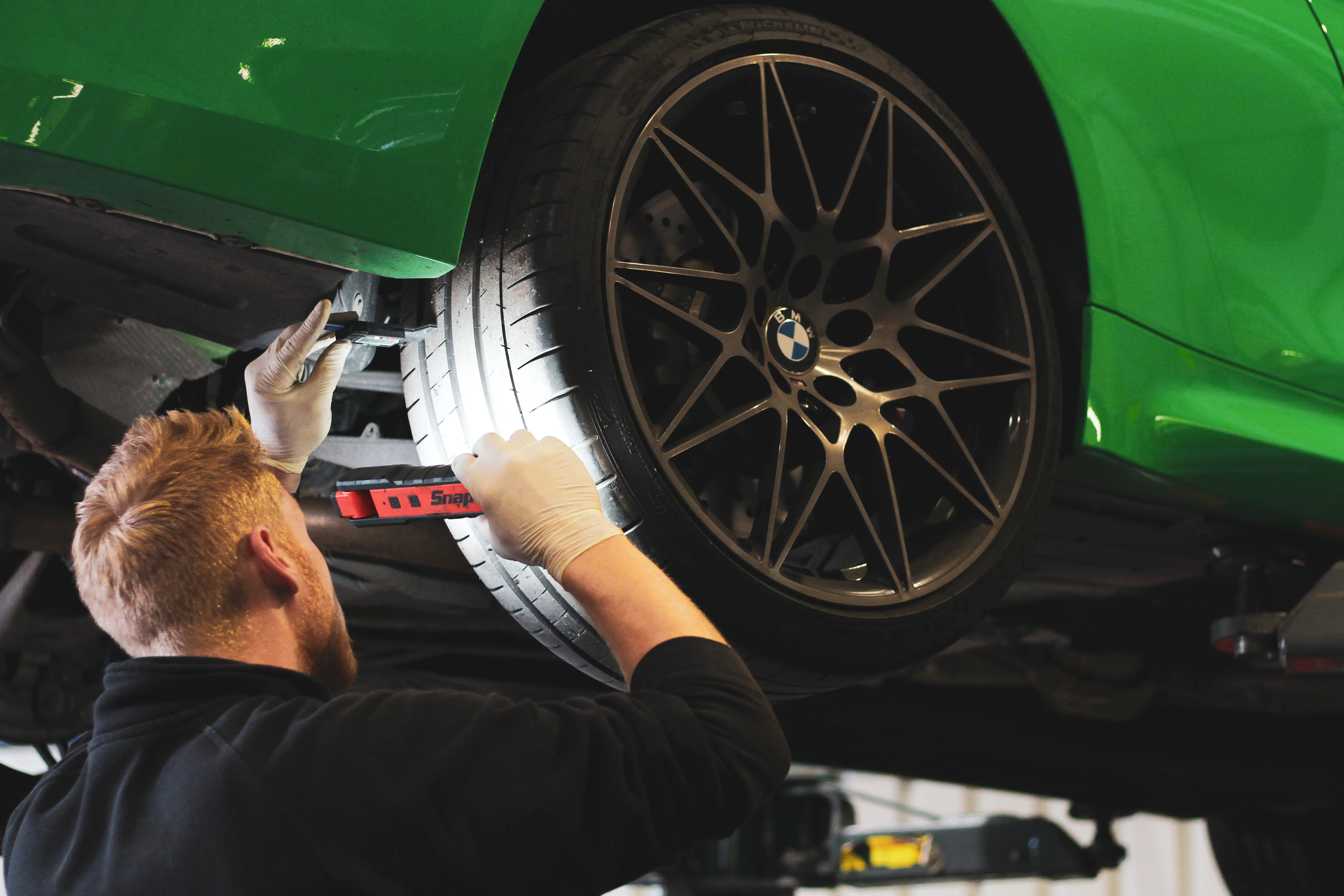
Every tyre check here measures tread across the full width and reads the date codes — and if nothing's needed, that's exactly what we'll tell you.
Tyres are chassis parts on a BMW
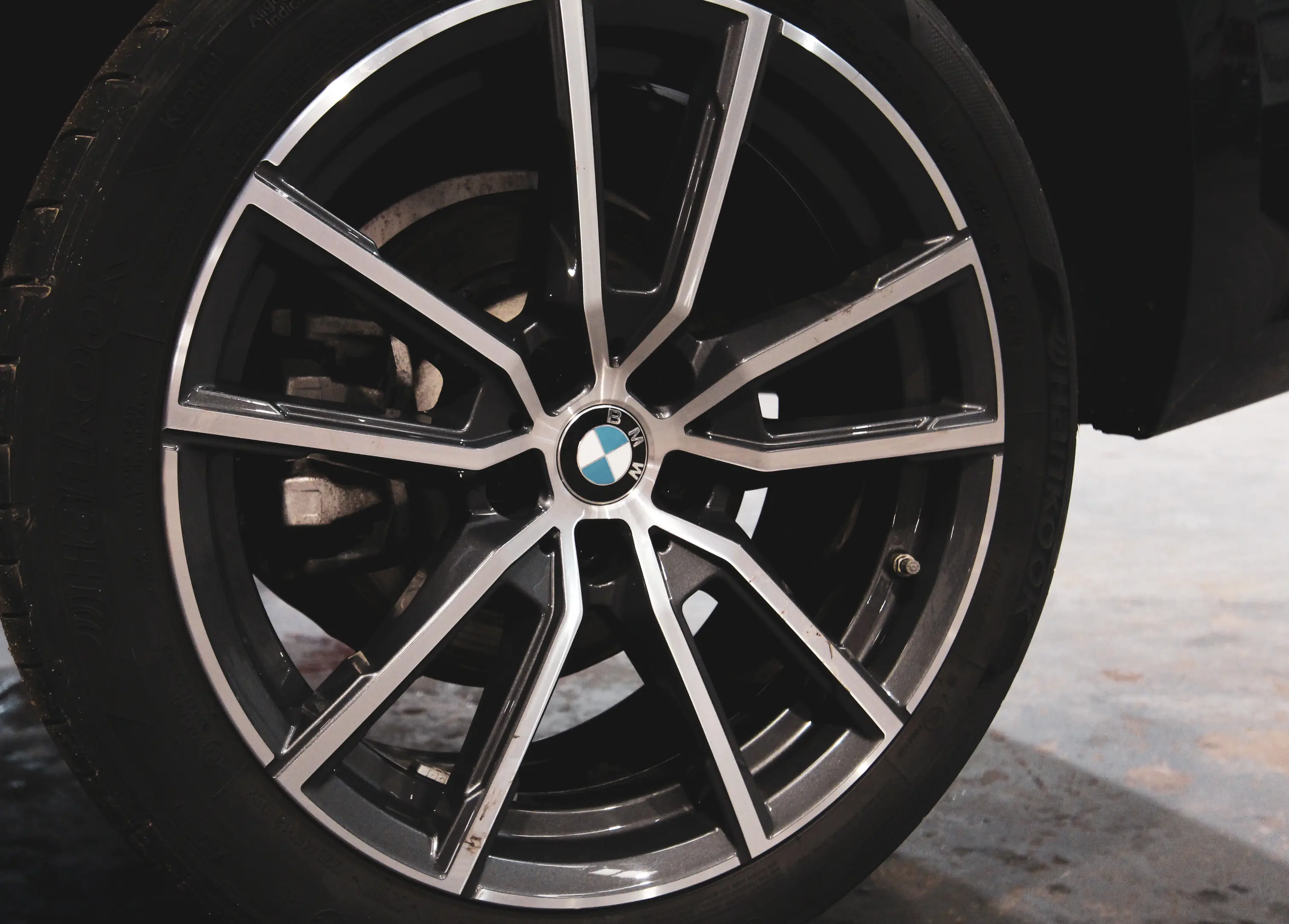
BMW develops and approves specific tyres for each model — the star (★) on the sidewall marks a tyre tested with the car's suspension, steering and stability systems. Many BMWs also run staggered fitments, with wider rears than fronts, so tyres can't be rotated and the driven axle wears first.
Most BMWs since the mid-2000s left the factory on run-flats with no spare wheel — and whether to stay with them is the question we get asked most. The honest answer takes a whole guide, and we wrote one.
Measured, recommended, fitted
Tread measured across the full width of each tyre — uneven readings reveal alignment or pressure problems a single-point check misses — plus date codes and sidewalls.
What needs doing now, what's due soon, what's fine. If a wear pattern points to a cause, we say so — new tyres alone won't fix bad geometry.
The right tyre for your BMW and your driving — star-marked and run-flat options included — fitted, balanced, TPMS reset and bolts torqued to BMW's specification.
Where the wear says the alignment is out, we recommend a check on our Hunter rig so the new tyres last the way they should.
Do I have to buy star-marked tyres for my BMW?+
No — it's BMW's recommendation, not a legal requirement. Star-marked tyres are tested and approved for your specific model and they're the safe default, especially on M cars and staggered setups. A premium tyre in the correct size, load and speed rating is a legitimate choice too — what matters most is keeping both tyres on an axle identical.
Can I switch my BMW from run-flats to normal tyres?+
Yes — it's legal and common, usually for a more comfortable ride. But change all four (never mix types), remember you'll have no spare, so carry a sealant kit, and it's worth telling your insurer. Our run-flat guide covers the full trade-off honestly.
Do you replace TPMS sensors?+
Yes. We check sensors when fitting tyres, replace failed or ageing units, and reset the system so the warning stays off. A malfunctioning TPMS is an MOT failure on cars first used from 2012, so it earns its place in the job.
How old is too old for a tyre?+
BMW's own handbook guidance is conservative — from around six years old, replacement is advised regardless of tread. Industry guidance says annual professional checks from five years and replacement by ten at the latest. Rubber hardens and cracks with age, which is why we read date codes at every check.
Why are my tyres wearing on the inside edge?+
Almost always geometry — camber or toe out of specification, sometimes worn suspension parts. BMWs run some negative camber from the factory, so slight inner wear is normal; rapid or feathered inner-edge wear means an alignment check before new tyres go on.
Members get 15% off OE parts — and honest advice comes free for everyone.
Membership is free right now (normally £69) — join before you book.