
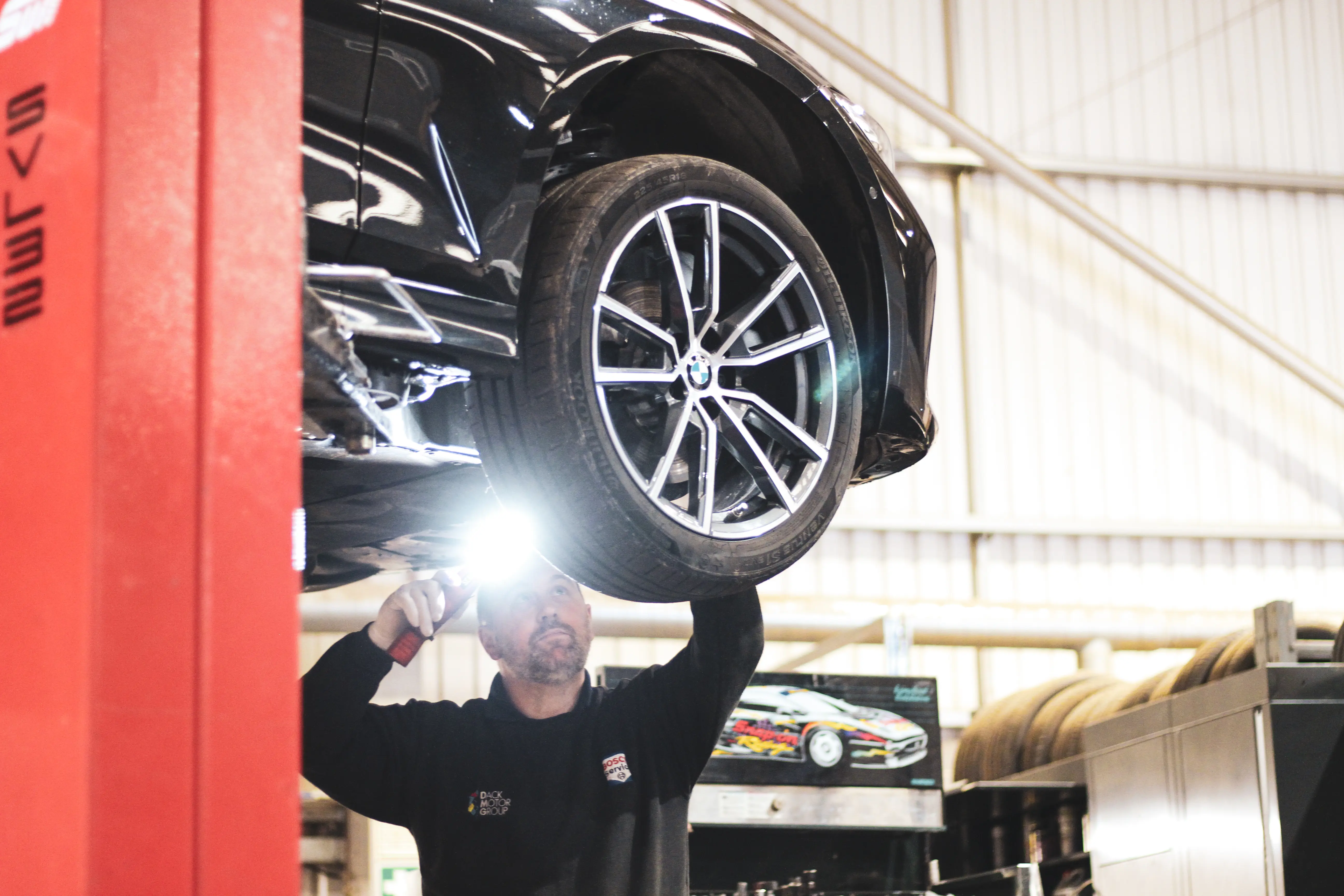
The way a BMW should feel, restored
Bushes, arms, springs, dampers and air suspension — found on the road test, shown on video, repaired to spec, and finished with alignment to BMW’s own figures.
Noises and habits worth investigating
Suspension wear creeps up mile by mile, so most owners adapt to it without noticing — until a pothole makes it obvious. The good news: the usual culprits are modest parts like drop links and bushes, and a short ramp inspection identifies them precisely.
One to know about UK BMWs: rear coil springs can snap silently — corrosion creeps under the coating and the bottom coil cracks off out of sight, often found at MOT rather than heard.
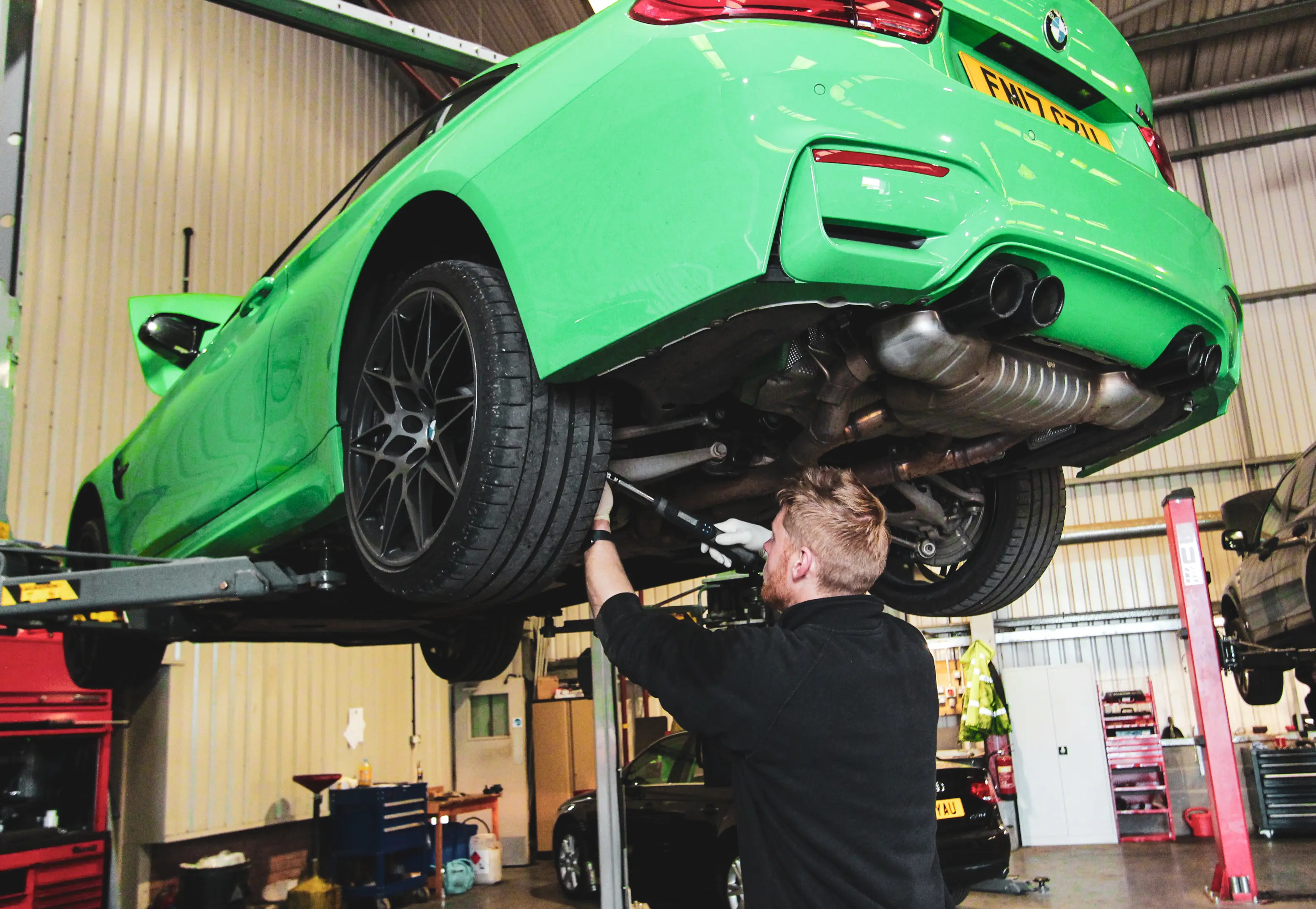
We know where each generation goes soft
Front control-arm and thrust-arm bushes are the classic BMW wear item across every generation — softening with age into vague steering, tramlining and a braking shudder that’s routinely misdiagnosed as warped discs. Self-levelling rear air suspension on Tourings and the bigger X cars has its own known chain: springs leak with age, the compressor overworks, and the rear sags overnight — so we fix leaks first, not just fit a new pump.
Steering has its patterns too. Electric racks on newer cars are diagnosable rather than guesswork, and the low-speed clunk on X1-family cars traces to the steering shaft joint — cured with a shaft, not a whole rack. Every suspension job ends the same way: alignment to factory data on our Hunter rig, because geometry is where the handling actually lives.
Road test, ramp, repair, align
We reproduce the noise or complaint on the road, then inspect properly on the ramp — levering bushes, checking joints, springs, dampers and steering play — and film anything worn.
What’s actually worn, what’s safety-relevant and what can wait — backed by the video, with a fixed quote before anything happens.
OE-quality arms, bushes, springs and dampers — in axle pairs where it matters — with bush bolts torqued at ride height so new rubber isn’t ruined from day one.
Four-wheel alignment to BMW’s settings, the steering angle sensor recalibrated so DSC knows where straight ahead is, then a final road test.
There's a knock over bumps — is it safe to drive?+
Usually it's something modest like a drop link or anti-roll bar bush, but the same noise can come from a worn arm or a broken spring — so it's worth a prompt check rather than months of turning the radio up. A short ramp inspection identifies it, and we'll tell you honestly whether it's urgent or can wait.
Why does my BMW suddenly ride so harshly?+
Three usual suspects: tyres (especially ageing run-flats, whose stiff sidewalls transmit everything), tired dampers, and softened bushes — and on cars with adaptive dampers, a fault can lock the damping firm. Because they interact, we assess ride complaints as a whole rather than selling one part and hoping.
Do I really need alignment after suspension work?+
Yes. Replacing arms, bushes or track rods changes the geometry, and the steering angle sensor must then be recalibrated so the stability control knows where straight ahead is. Every suspension job here ends with four-wheel alignment to BMW's own data — it protects your tyres and restores the steering.
My Touring sits low at the back after parking — what’s wrong?+
The classic sign of self-levelling rear air suspension losing pressure — usually perished air springs, with the compressor wearing out from working overtime. We test the system, fix the leak first, and renew the compressor only if it's genuinely tired, so the repair lasts.
Will worn bushes fail the MOT?+
They can — an excessively worn suspension arm bush is a Major defect, which means a fail; lesser wear usually earns an advisory first. If your last certificate carried suspension advisories, an inspection now lets you plan the work calmly instead of being caught out at test time.
30% off repair labour for members. 15% off OE parts.
Membership is free right now (normally £69) — join before you book.